Buy loran-europe.eu ?
We are moving the project
loran-europe.eu .
Are you interested in purchasing the domain
loran-europe.eu ?
domain@kv-gmbh.de · 0541-91531010
Buy loran-europe.eu ?
What is sedimentation behavior and sedimentation coefficient?
Sedimentation behavior refers to the process by which particles or molecules in a liquid solution settle to the bottom of a container under the influence of gravity. The sedimentation coefficient is a measure of the rate at which a particle or molecule sediments in a centrifugal field, and it is often used to characterize the size and shape of macromolecules such as proteins and nucleic acids. The sedimentation coefficient is typically expressed in Svedberg units (S), with larger values indicating faster sedimentation rates. **
What happens during sedimentation?
During sedimentation, particles in a fluid settle down and separate from the liquid due to the force of gravity. As the particles are heavier than the liquid, they gradually sink to the bottom of the container. This process allows for the separation of solid particles from the liquid, making it easier to remove and dispose of the sediment. Sedimentation is commonly used in various industries such as water treatment, mining, and food processing to separate solids from liquids. **


Similar search terms for Sedimentation
Top-Angebote
Products related to Sedimentation:
-
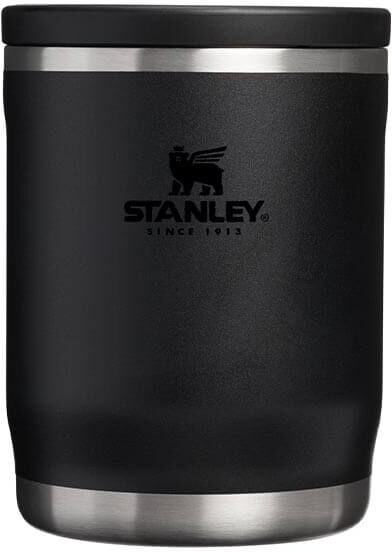
Stanley Adventure To-Go 0.35L Black Food JarThe Stanley Adventure ToGo 0.35L Black Food Jar is designed for those who enjoy meals on the move. Made from durable 18/8 stainless steel, this jar features double-wall vacuum insulation to keep your food hot or cold for up to 6 hours. Its wide opening allows for easy filling and cleaning, making it a practical choice for outdoor adventures or daily commutes. This food jar is BPA-free and leakproof, ensuring that your meals stay secure during travel. It's also dishwasher safe for effortless cleaning, making it suitable for everyday use. Dimensions: 10.7(H) x 10(W) x 10(D)cm Weight: 0.3kg.28,50 £*Shipping: 3,50 £Secure redirect to the provider
-
Stanley Adventure To-Go 0.53L Black Food JarThe Stanley Adventure ToGo 0.53L Black Food Jar is designed for those who enjoy meals on the move. Made from durable 18/8 stainless steel, this jar features double-wall vacuum insulation to keep your food hot or cold for up to 6 hours. Its wide opening allows for easy filling and cleaning, making it a practical choice for outdoor adventures or daily commutes. This food jar is BPA-free and leakproof, ensuring that your meals stay secure during travel. It's also dishwasher safe for effortless cleaning, making it suitable for everyday use. Dimensions: 13.5(H) x 10(W) x 10(D)cm Weight: 0.36kg.31,50 £*Shipping: 3,50 £Secure redirect to the provider
-
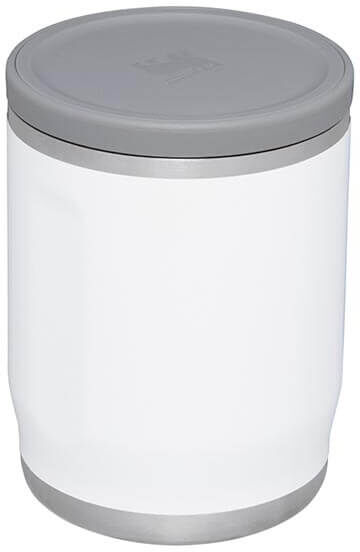
Stanley Adventure To-Go 0.53L Frost Food JarThe Stanley Adventure ToGo 0.53L Frost Food Jar is designed for those who enjoy meals on the move. Made from durable 18/8 stainless steel, this jar features double-wall vacuum insulation to keep your food hot or cold for up to 6 hours. Its wide opening allows for easy filling and cleaning, making it a practical choice for outdoor adventures or daily commutes. This food jar is BPA-free and leakproof, ensuring that your meals stay secure during travel. It's also dishwasher safe for effortless cleaning, making it suitable for everyday use. Dimensions: 13.5(H) x 10(W) x 10(D)cm Weight: 0.36kg.31,50 £*Shipping: 3,50 £Secure redirect to the provider


-
What is the meaning of sedimentation?
Sedimentation is the process by which particles in a liquid or gas settle out and deposit at the bottom of a container. This can occur due to gravity or other forces acting on the particles. Sedimentation is an important natural process that helps in the formation of sedimentary rocks and plays a key role in various environmental processes such as water purification and soil formation. It is also commonly used in industries such as wastewater treatment and mining to separate particles from liquids or gases. **
-
What is a practical example of sedimentation?
A practical example of sedimentation is the process of settling out suspended particles in a glass of muddy water. When the glass is left undisturbed for some time, the heavier particles in the water will gradually settle to the bottom, leaving clearer water at the top. This is a natural process where gravity causes the particles to separate based on their weight, demonstrating the principle of sedimentation. **
-
Where is sedimentation used as a separation method?
Sedimentation is commonly used as a separation method in various industries such as wastewater treatment plants, mining operations, and the food and beverage industry. In wastewater treatment plants, sedimentation is used to separate solid particles from liquid waste. In mining operations, sedimentation is used to separate valuable minerals from the ore. In the food and beverage industry, sedimentation is used to clarify liquids such as juices and wines by allowing solid particles to settle at the bottom. **
-
Why is the sedimentation in peanut oil bad?
Sedimentation in peanut oil is bad because it can lead to the formation of off-flavors and odors, as well as a decrease in the oil's quality and shelf life. The sedimentation can also affect the oil's appearance, making it less visually appealing. Additionally, sedimentation can clog filters and equipment, leading to operational issues in food processing facilities. Therefore, it is important to minimize sedimentation in peanut oil to maintain its quality and usability. **

What is the relationship between slope, erosion, and sedimentation?
The relationship between slope, erosion, and sedimentation is that slope plays a significant role in determining the rate and extent of erosion and sedimentation. Steeper slopes generally experience more erosion as gravity pulls water and sediment downhill at a faster rate. This erosion can lead to increased sedimentation in lower-lying areas, such as riverbeds and lakes. Conversely, flatter slopes may experience less erosion and sedimentation due to reduced water flow and sediment transport. Overall, the slope of the land directly influences the processes of erosion and sedimentation in a given area. **
What is the difference between electrode deposition and electrode sedimentation?
Electrode deposition and electrode sedimentation are both processes used to coat a substrate with a layer of material through electrochemical methods. The main difference between the two is the mechanism by which the material is deposited onto the substrate. In electrode deposition, the material is directly deposited onto the substrate through the application of an electric current, while in electrode sedimentation, the material is first dispersed in a solution and then allowed to settle onto the substrate through gravity or other external forces. Overall, electrode deposition is a more controlled and precise process, while electrode sedimentation is more reliant on the settling behavior of the dispersed material. **
Top-Angebote
Products related to Sedimentation:
-
From the Archives: Black History and Culture Value PackThis brand-new series is rooted in a profound commitment to shedding light on some of the important -- and often lesser-known -- aspects of Black history. From the Archives features landmarks, events, people, and artistic endeavors that have played...26,99 $*Shipping: 0,00 $Secure redirect to the provider
-
Orion The Book of Humans by Adam Rutherford – A Brief History of Culture, Sex, War & EvolutionWHAT MAKES US HUMAN? Waging war? Sex for pleasure? Creating art? Mastery of fire? In this thrilling tour of the animal kingdom, Adam Rutherford tells the story of how we became the unique creatures we are today. Illuminated by the latest scientific discoveries, THE BOOK OF HUMANS is a dazzling compendium of what unequivocally fixes us as animals, and reveals how we are extraordinary among them.4,98 £*Shipping: 1,99 £Secure redirect to the provider
-
Stanley Adventure To-Go 0.35L Black Food JarThe Stanley Adventure ToGo 0.35L Black Food Jar is designed for those who enjoy meals on the move. Made from durable 18/8 stainless steel, this jar features double-wall vacuum insulation to keep your food hot or cold for up to 6 hours. Its wide opening allows for easy filling and cleaning, making it a practical choice for outdoor adventures or daily commutes. This food jar is BPA-free and leakproof, ensuring that your meals stay secure during travel. It's also dishwasher safe for effortless cleaning, making it suitable for everyday use. Dimensions: 10.7(H) x 10(W) x 10(D)cm Weight: 0.3kg.28,50 £*Shipping: 3,50 £Secure redirect to the provider
-
What is sedimentation behavior and sedimentation coefficient?
Sedimentation behavior refers to the process by which particles or molecules in a liquid solution settle to the bottom of a container under the influence of gravity. The sedimentation coefficient is a measure of the rate at which a particle or molecule sediments in a centrifugal field, and it is often used to characterize the size and shape of macromolecules such as proteins and nucleic acids. The sedimentation coefficient is typically expressed in Svedberg units (S), with larger values indicating faster sedimentation rates. **
-
What happens during sedimentation?
During sedimentation, particles in a fluid settle down and separate from the liquid due to the force of gravity. As the particles are heavier than the liquid, they gradually sink to the bottom of the container. This process allows for the separation of solid particles from the liquid, making it easier to remove and dispose of the sediment. Sedimentation is commonly used in various industries such as water treatment, mining, and food processing to separate solids from liquids. **
-
What is the meaning of sedimentation?
Sedimentation is the process by which particles in a liquid or gas settle out and deposit at the bottom of a container. This can occur due to gravity or other forces acting on the particles. Sedimentation is an important natural process that helps in the formation of sedimentary rocks and plays a key role in various environmental processes such as water purification and soil formation. It is also commonly used in industries such as wastewater treatment and mining to separate particles from liquids or gases. **
-
What is a practical example of sedimentation?
A practical example of sedimentation is the process of settling out suspended particles in a glass of muddy water. When the glass is left undisturbed for some time, the heavier particles in the water will gradually settle to the bottom, leaving clearer water at the top. This is a natural process where gravity causes the particles to separate based on their weight, demonstrating the principle of sedimentation. **
Similar search terms for Sedimentation
-
Stanley Adventure To-Go 0.53L Black Food JarThe Stanley Adventure ToGo 0.53L Black Food Jar is designed for those who enjoy meals on the move. Made from durable 18/8 stainless steel, this jar features double-wall vacuum insulation to keep your food hot or cold for up to 6 hours. Its wide opening allows for easy filling and cleaning, making it a practical choice for outdoor adventures or daily commutes. This food jar is BPA-free and leakproof, ensuring that your meals stay secure during travel. It's also dishwasher safe for effortless cleaning, making it suitable for everyday use. Dimensions: 13.5(H) x 10(W) x 10(D)cm Weight: 0.36kg.31,50 £*Shipping: 3,50 £Secure redirect to the provider
-
Stanley Adventure To-Go 0.53L Frost Food JarThe Stanley Adventure ToGo 0.53L Frost Food Jar is designed for those who enjoy meals on the move. Made from durable 18/8 stainless steel, this jar features double-wall vacuum insulation to keep your food hot or cold for up to 6 hours. Its wide opening allows for easy filling and cleaning, making it a practical choice for outdoor adventures or daily commutes. This food jar is BPA-free and leakproof, ensuring that your meals stay secure during travel. It's also dishwasher safe for effortless cleaning, making it suitable for everyday use. Dimensions: 13.5(H) x 10(W) x 10(D)cm Weight: 0.36kg.31,50 £*Shipping: 3,50 £Secure redirect to the provider
-
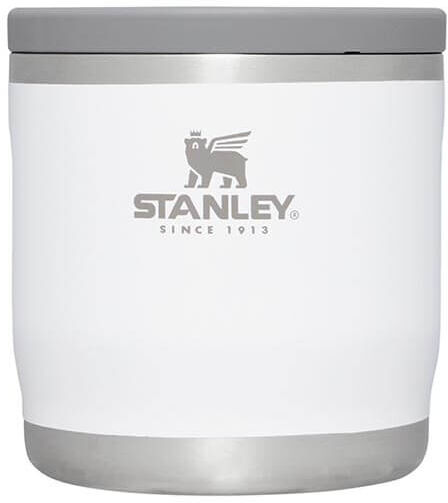
Stanley Adventure To-Go 0.35L Frost Food JarThe Stanley Adventure ToGo 0.35L Frost Food Jar is designed for those who enjoy meals on the move. Made from durable 18/8 stainless steel, this jar features double-wall vacuum insulation to keep your food hot or cold for up to 6 hours. Its wide opening allows for easy filling and cleaning, making it a practical choice for outdoor adventures or daily commutes. This food jar is BPA-free and leakproof, ensuring that your meals stay secure during travel. It's also dishwasher safe for effortless cleaning, making it suitable for everyday use. Dimensions: 10.7(H) x 10(W) x 10(D)cm Weight: 0.3kg.28,50 £*Shipping: 3,50 £Secure redirect to the provider
-
Portable Mini Compass Keychain Aluminum Outdoor Travel Adventure Tool Portable Mini Compass Keychain Aluminum Outdoor Travel Adventure ToolNever lose your way on any adventure with the Portable Mini Compass Keychain. Designed for explorers, hikers, and outdoor enthusiasts, this compact compass fits effortlessly in your pocket or attaches to your keys. Crafted from durable aluminum...29,97 $*Shipping: 0,00 $Secure redirect to the provider
-
Where is sedimentation used as a separation method?
Sedimentation is commonly used as a separation method in various industries such as wastewater treatment plants, mining operations, and the food and beverage industry. In wastewater treatment plants, sedimentation is used to separate solid particles from liquid waste. In mining operations, sedimentation is used to separate valuable minerals from the ore. In the food and beverage industry, sedimentation is used to clarify liquids such as juices and wines by allowing solid particles to settle at the bottom. **
-
Why is the sedimentation in peanut oil bad?
Sedimentation in peanut oil is bad because it can lead to the formation of off-flavors and odors, as well as a decrease in the oil's quality and shelf life. The sedimentation can also affect the oil's appearance, making it less visually appealing. Additionally, sedimentation can clog filters and equipment, leading to operational issues in food processing facilities. Therefore, it is important to minimize sedimentation in peanut oil to maintain its quality and usability. **
-
What is the relationship between slope, erosion, and sedimentation?
The relationship between slope, erosion, and sedimentation is that slope plays a significant role in determining the rate and extent of erosion and sedimentation. Steeper slopes generally experience more erosion as gravity pulls water and sediment downhill at a faster rate. This erosion can lead to increased sedimentation in lower-lying areas, such as riverbeds and lakes. Conversely, flatter slopes may experience less erosion and sedimentation due to reduced water flow and sediment transport. Overall, the slope of the land directly influences the processes of erosion and sedimentation in a given area. **
-
What is the difference between electrode deposition and electrode sedimentation?
Electrode deposition and electrode sedimentation are both processes used to coat a substrate with a layer of material through electrochemical methods. The main difference between the two is the mechanism by which the material is deposited onto the substrate. In electrode deposition, the material is directly deposited onto the substrate through the application of an electric current, while in electrode sedimentation, the material is first dispersed in a solution and then allowed to settle onto the substrate through gravity or other external forces. Overall, electrode deposition is a more controlled and precise process, while electrode sedimentation is more reliant on the settling behavior of the dispersed material. **
* All prices are inclusive of VAT and, if applicable, plus shipping costs. The offer information is based on the details provided by the respective shop and is updated through automated processes. Real-time updates do not occur, so deviations can occur in individual cases. ** Note: Parts of this content were created by AI.