Buy loran-europe.eu ?
We are moving the project
loran-europe.eu .
Are you interested in purchasing the domain
loran-europe.eu ?
domain@kv-gmbh.de · 0541-91531010
Buy loran-europe.eu ?
What are polygons?
Polygons are two-dimensional shapes that are made up of straight lines and enclosed by a set of vertices. They can have any number of sides, but must have at least three. Common examples of polygons include triangles, squares, rectangles, pentagons, hexagons, and octagons. Polygons are used in various mathematical and geometric applications, and are fundamental to understanding the properties of shapes and their relationships. **
What are triangles and polygons?
Triangles are three-sided polygons, while polygons are closed shapes with straight sides. Triangles are a specific type of polygon with three sides and three angles. Polygons can have any number of sides, as long as they are straight and the shape is closed. Both triangles and polygons are fundamental shapes in geometry and are used to study the properties of angles, sides, and area. **


Similar search terms for Polygons
Top-Angebote
Products related to Polygons:
-
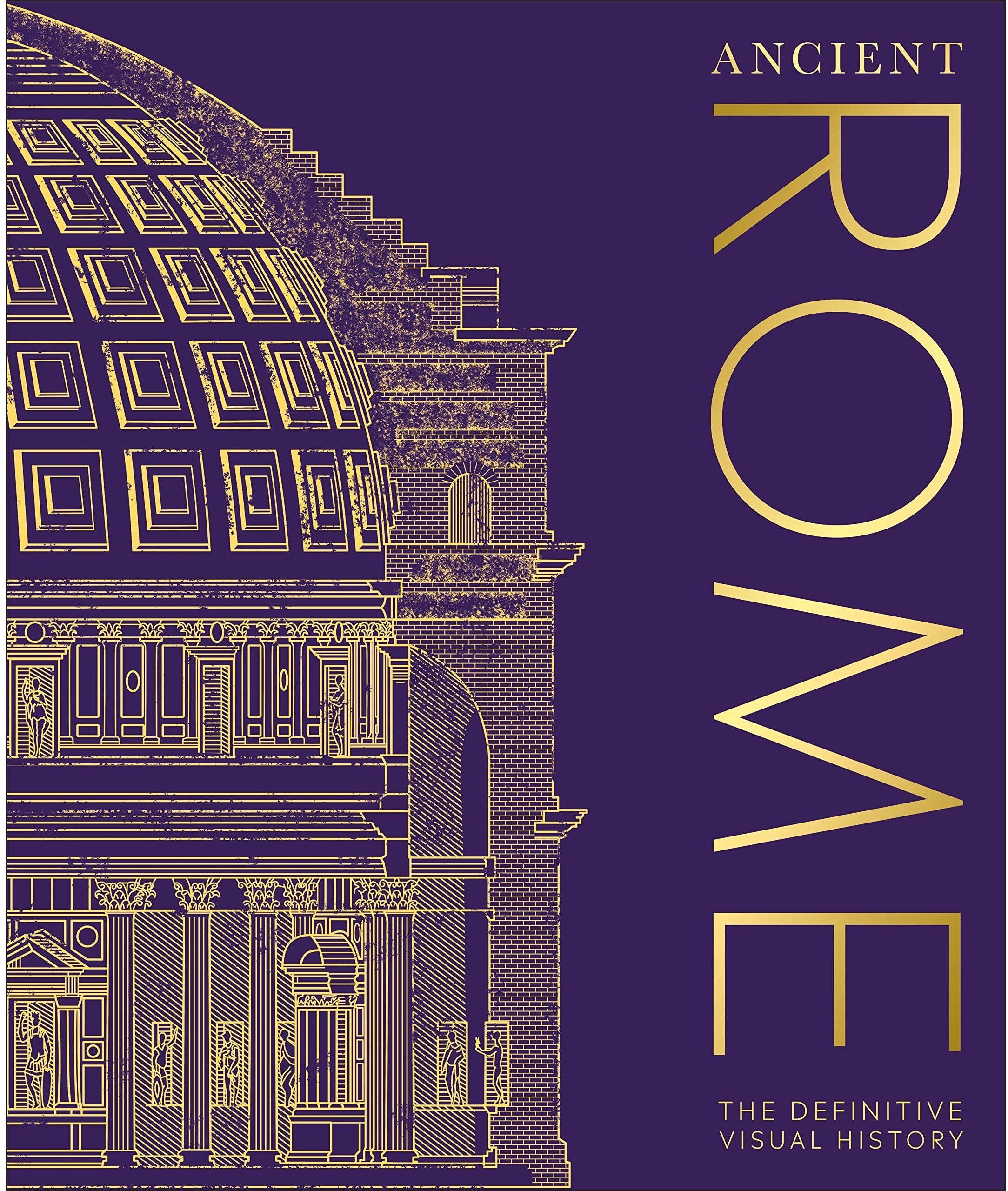
Ancient Rome: The Definitive Visual History (DK Classic History)Immerse yourself in the history of ancient Rome - from its origins as a small settlement on the Palatine Hill to its peak as an empire reigning over 90 million people, and its tumultuous decline. Covering more than 1,000 years of history, and an empire that stretched from Scotland to Syria, Ancient Rome reveals in vivid detail all of the key political, cultural, and military events that shaped the Roman Empire and explores what it was like to live in a society that laid the foundations for many aspects of the modern world. Sumptuous photography and engaging text cover every facet of life in ancient Rome, from art, entertainment, and fashion to engineering, medicine, and war, while detailed maps trace the rise of the mighty Roman Empire. Step back in time in the pages of this history book to discover:- Themed spreads explore developments in areas such as sculpture, religion, warfare, and engineering. - Includes tales of the most dramatic events and battles in Roman history, as well as profiles of influential historical and cultural figures. - An optional 80pp reference section includes sections on rulers, gods and goddesses, and key sites. Featuring Rome's greatest emperors, from Augustus to Constantine, as well as profiles of generals, historians, and influential women, Ancient Rome also delves into the fascinating stories of gladiators, bakers, and enslaved people. The most iconic buildings of Rome are brought to life with specially commissioned CGI recreations, while the stories of ordinary citizens, soldiers, and persecuted groups from across the empire are told with the help of illustrations, artefacts, and eyewitness accounts. Beautifully illustrated and unparalleled in scope, Ancient Rome is the perfect book for anyone who is interested in this defining period of world history.19,95 £*Shipping: 2,99 £Secure redirect to the provider
-
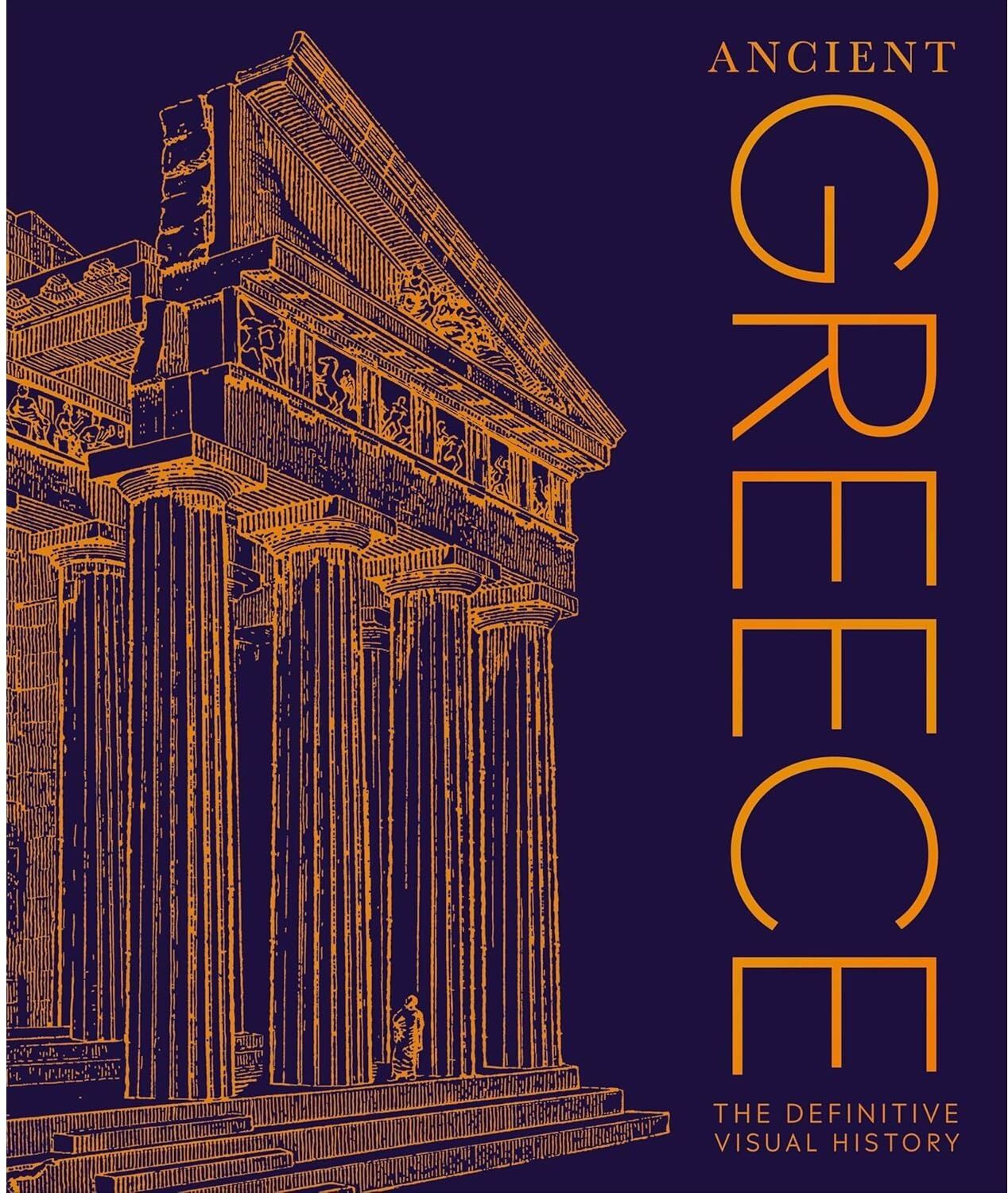
Ancient Greece: The Definitive Visual History (DK Classic History)Embark upon a fascinating journey through ancient Greece – from its rise and fall to its lasting legacy throughout the Western world. Spanning more than 3,000 years, Ancient Greece explores the tumultuous history of this glorious empire in vivid detail – from its Minoan and Mycenaean origins to the apogee of the warring city-states of Athens and Sparta, and from the death of its most charismatic leader, Alexander the Great, to its ultimate defeat by Rome. Sumptuous photography and authoritative, engaging text cover every facet of life in ancient Greece, from art, entertainment, and schools of thought to politics, medicine, and war, while the myths and religious beliefs of the ancient culture are explored and explained in depth. Greece’s military and political power shines through in fascinating maps of its legendary battles. Buried palaces and the Athenian Agora where Plato and Socrates discussed philosophy are brought back to life with stunning CGI artworks. And the stories of everyone from ordinary citizens to lawmakers and the first Olympic athletes are retold through eyewitness accounts and original artefacts.19,99 £*Shipping: 2,99 £Secure redirect to the provider
-
Stanley Adventure To-Go 0.35L Black Food JarThe Stanley Adventure ToGo 0.35L Black Food Jar is designed for those who enjoy meals on the move. Made from durable 18/8 stainless steel, this jar features double-wall vacuum insulation to keep your food hot or cold for up to 6 hours. Its wide opening allows for easy filling and cleaning, making it a practical choice for outdoor adventures or daily commutes. This food jar is BPA-free and leakproof, ensuring that your meals stay secure during travel. It's also dishwasher safe for effortless cleaning, making it suitable for everyday use. Dimensions: 10.7(H) x 10(W) x 10(D)cm Weight: 0.3kg.28,50 £*Shipping: 3,50 £Secure redirect to the provider


-
How can I reduce further polygons?
To reduce further polygons, you can try simplifying the geometry by removing unnecessary vertices or edges. This can be done by using tools like the simplify function in modeling software or manually editing the mesh to remove unnecessary details. Additionally, you can try using techniques like retopology to create a cleaner and more optimized mesh with fewer polygons. Finally, consider using LOD (Level of Detail) techniques to dynamically adjust the level of detail based on the distance of the object from the camera, reducing the number of polygons rendered at a given time. **
-
How can I further reduce polygons?
You can further reduce polygons by using tools such as the "Decimate" modifier in 3D modeling software, which allows you to reduce the number of polygons while preserving the overall shape of the model. Additionally, you can manually optimize the topology of the model by merging vertices, removing unnecessary edge loops, and simplifying complex geometry. Another approach is to use automated retopology tools to create a lower-polygon version of the model while maintaining its overall structure and details. **
-
What are polygons in video games?
Polygons in video games are the building blocks of 3D graphics. They are flat, two-dimensional shapes that are used to create the surfaces of 3D objects in the game world. These polygons are connected to form the overall shape of the object, and then textures and lighting are applied to give them a more realistic appearance. The more polygons used, the more detailed and complex the 3D models can be, but this also requires more processing power from the computer or gaming console. **
-
How do you calculate regular polygons?
To calculate the area of a regular polygon, you can use the formula: Area = (1/2) * apothem * perimeter, where the apothem is the distance from the center of the polygon to the midpoint of any side, and the perimeter is the total length of all the sides. To calculate the interior angle of a regular polygon, you can use the formula: Interior angle = (180 * (n - 2)) / n, where n is the number of sides. Finally, to calculate the exterior angle of a regular polygon, you can use the formula: Exterior angle = 360 / n, where n is the number of sides. **


Does a subdivision surface create more polygons?
Yes, a subdivision surface does create more polygons. When a subdivision surface is applied to a model, it increases the number of polygons by subdividing the existing geometry and creating a smoother surface. This can result in a higher level of detail and a more organic shape, but it also increases the complexity of the model and can impact performance in some cases. **
How do you calculate polygons in math?
To calculate the area of a polygon in math, you can use the formula A = 1/2 * base * height for a triangle, A = length * width for a rectangle, or A = 1/2 * apothem * perimeter for a regular polygon. For irregular polygons, you can divide the shape into smaller, simpler shapes and calculate their individual areas, then sum them up to find the total area of the polygon. Additionally, you can use trigonometric functions to calculate the area of a polygon with known side lengths and angles. **
Top-Angebote
Products related to Polygons:
-
From the Archives: Black History and Culture Value PackThis brand-new series is rooted in a profound commitment to shedding light on some of the important -- and often lesser-known -- aspects of Black history. From the Archives features landmarks, events, people, and artistic endeavors that have played...26,99 $*Shipping: 0,00 $Secure redirect to the provider
-
Orion The Book of Humans by Adam Rutherford – A Brief History of Culture, Sex, War & EvolutionWHAT MAKES US HUMAN? Waging war? Sex for pleasure? Creating art? Mastery of fire? In this thrilling tour of the animal kingdom, Adam Rutherford tells the story of how we became the unique creatures we are today. Illuminated by the latest scientific discoveries, THE BOOK OF HUMANS is a dazzling compendium of what unequivocally fixes us as animals, and reveals how we are extraordinary among them.4,98 £*Shipping: 1,99 £Secure redirect to the provider
-
Ancient Rome: The Definitive Visual History (DK Classic History)Immerse yourself in the history of ancient Rome - from its origins as a small settlement on the Palatine Hill to its peak as an empire reigning over 90 million people, and its tumultuous decline. Covering more than 1,000 years of history, and an empire that stretched from Scotland to Syria, Ancient Rome reveals in vivid detail all of the key political, cultural, and military events that shaped the Roman Empire and explores what it was like to live in a society that laid the foundations for many aspects of the modern world. Sumptuous photography and engaging text cover every facet of life in ancient Rome, from art, entertainment, and fashion to engineering, medicine, and war, while detailed maps trace the rise of the mighty Roman Empire. Step back in time in the pages of this history book to discover:- Themed spreads explore developments in areas such as sculpture, religion, warfare, and engineering. - Includes tales of the most dramatic events and battles in Roman history, as well as profiles of influential historical and cultural figures. - An optional 80pp reference section includes sections on rulers, gods and goddesses, and key sites. Featuring Rome's greatest emperors, from Augustus to Constantine, as well as profiles of generals, historians, and influential women, Ancient Rome also delves into the fascinating stories of gladiators, bakers, and enslaved people. The most iconic buildings of Rome are brought to life with specially commissioned CGI recreations, while the stories of ordinary citizens, soldiers, and persecuted groups from across the empire are told with the help of illustrations, artefacts, and eyewitness accounts. Beautifully illustrated and unparalleled in scope, Ancient Rome is the perfect book for anyone who is interested in this defining period of world history.19,95 £*Shipping: 2,99 £Secure redirect to the provider
-
Ancient Greece: The Definitive Visual History (DK Classic History)Embark upon a fascinating journey through ancient Greece – from its rise and fall to its lasting legacy throughout the Western world. Spanning more than 3,000 years, Ancient Greece explores the tumultuous history of this glorious empire in vivid detail – from its Minoan and Mycenaean origins to the apogee of the warring city-states of Athens and Sparta, and from the death of its most charismatic leader, Alexander the Great, to its ultimate defeat by Rome. Sumptuous photography and authoritative, engaging text cover every facet of life in ancient Greece, from art, entertainment, and schools of thought to politics, medicine, and war, while the myths and religious beliefs of the ancient culture are explored and explained in depth. Greece’s military and political power shines through in fascinating maps of its legendary battles. Buried palaces and the Athenian Agora where Plato and Socrates discussed philosophy are brought back to life with stunning CGI artworks. And the stories of everyone from ordinary citizens to lawmakers and the first Olympic athletes are retold through eyewitness accounts and original artefacts.19,99 £*Shipping: 2,99 £Secure redirect to the provider
-
What are polygons?
Polygons are two-dimensional shapes that are made up of straight lines and enclosed by a set of vertices. They can have any number of sides, but must have at least three. Common examples of polygons include triangles, squares, rectangles, pentagons, hexagons, and octagons. Polygons are used in various mathematical and geometric applications, and are fundamental to understanding the properties of shapes and their relationships. **
-
What are triangles and polygons?
Triangles are three-sided polygons, while polygons are closed shapes with straight sides. Triangles are a specific type of polygon with three sides and three angles. Polygons can have any number of sides, as long as they are straight and the shape is closed. Both triangles and polygons are fundamental shapes in geometry and are used to study the properties of angles, sides, and area. **
-
How can I reduce further polygons?
To reduce further polygons, you can try simplifying the geometry by removing unnecessary vertices or edges. This can be done by using tools like the simplify function in modeling software or manually editing the mesh to remove unnecessary details. Additionally, you can try using techniques like retopology to create a cleaner and more optimized mesh with fewer polygons. Finally, consider using LOD (Level of Detail) techniques to dynamically adjust the level of detail based on the distance of the object from the camera, reducing the number of polygons rendered at a given time. **
-
How can I further reduce polygons?
You can further reduce polygons by using tools such as the "Decimate" modifier in 3D modeling software, which allows you to reduce the number of polygons while preserving the overall shape of the model. Additionally, you can manually optimize the topology of the model by merging vertices, removing unnecessary edge loops, and simplifying complex geometry. Another approach is to use automated retopology tools to create a lower-polygon version of the model while maintaining its overall structure and details. **
Similar search terms for Polygons
-
Stanley Adventure To-Go 0.35L Black Food JarThe Stanley Adventure ToGo 0.35L Black Food Jar is designed for those who enjoy meals on the move. Made from durable 18/8 stainless steel, this jar features double-wall vacuum insulation to keep your food hot or cold for up to 6 hours. Its wide opening allows for easy filling and cleaning, making it a practical choice for outdoor adventures or daily commutes. This food jar is BPA-free and leakproof, ensuring that your meals stay secure during travel. It's also dishwasher safe for effortless cleaning, making it suitable for everyday use. Dimensions: 10.7(H) x 10(W) x 10(D)cm Weight: 0.3kg.28,50 £*Shipping: 3,50 £Secure redirect to the provider
-
Stanley Adventure To-Go 0.53L Black Food JarThe Stanley Adventure ToGo 0.53L Black Food Jar is designed for those who enjoy meals on the move. Made from durable 18/8 stainless steel, this jar features double-wall vacuum insulation to keep your food hot or cold for up to 6 hours. Its wide opening allows for easy filling and cleaning, making it a practical choice for outdoor adventures or daily commutes. This food jar is BPA-free and leakproof, ensuring that your meals stay secure during travel. It's also dishwasher safe for effortless cleaning, making it suitable for everyday use. Dimensions: 13.5(H) x 10(W) x 10(D)cm Weight: 0.36kg.31,50 £*Shipping: 3,50 £Secure redirect to the provider
-
Stanley Adventure To-Go 0.53L Frost Food JarThe Stanley Adventure ToGo 0.53L Frost Food Jar is designed for those who enjoy meals on the move. Made from durable 18/8 stainless steel, this jar features double-wall vacuum insulation to keep your food hot or cold for up to 6 hours. Its wide opening allows for easy filling and cleaning, making it a practical choice for outdoor adventures or daily commutes. This food jar is BPA-free and leakproof, ensuring that your meals stay secure during travel. It's also dishwasher safe for effortless cleaning, making it suitable for everyday use. Dimensions: 13.5(H) x 10(W) x 10(D)cm Weight: 0.36kg.31,50 £*Shipping: 3,50 £Secure redirect to the provider
-
What are polygons in video games?
Polygons in video games are the building blocks of 3D graphics. They are flat, two-dimensional shapes that are used to create the surfaces of 3D objects in the game world. These polygons are connected to form the overall shape of the object, and then textures and lighting are applied to give them a more realistic appearance. The more polygons used, the more detailed and complex the 3D models can be, but this also requires more processing power from the computer or gaming console. **
-
How do you calculate regular polygons?
To calculate the area of a regular polygon, you can use the formula: Area = (1/2) * apothem * perimeter, where the apothem is the distance from the center of the polygon to the midpoint of any side, and the perimeter is the total length of all the sides. To calculate the interior angle of a regular polygon, you can use the formula: Interior angle = (180 * (n - 2)) / n, where n is the number of sides. Finally, to calculate the exterior angle of a regular polygon, you can use the formula: Exterior angle = 360 / n, where n is the number of sides. **
-
Does a subdivision surface create more polygons?
Yes, a subdivision surface does create more polygons. When a subdivision surface is applied to a model, it increases the number of polygons by subdividing the existing geometry and creating a smoother surface. This can result in a higher level of detail and a more organic shape, but it also increases the complexity of the model and can impact performance in some cases. **
-
How do you calculate polygons in math?
To calculate the area of a polygon in math, you can use the formula A = 1/2 * base * height for a triangle, A = length * width for a rectangle, or A = 1/2 * apothem * perimeter for a regular polygon. For irregular polygons, you can divide the shape into smaller, simpler shapes and calculate their individual areas, then sum them up to find the total area of the polygon. Additionally, you can use trigonometric functions to calculate the area of a polygon with known side lengths and angles. **
* All prices are inclusive of VAT and, if applicable, plus shipping costs. The offer information is based on the details provided by the respective shop and is updated through automated processes. Real-time updates do not occur, so deviations can occur in individual cases. ** Note: Parts of this content were created by AI.